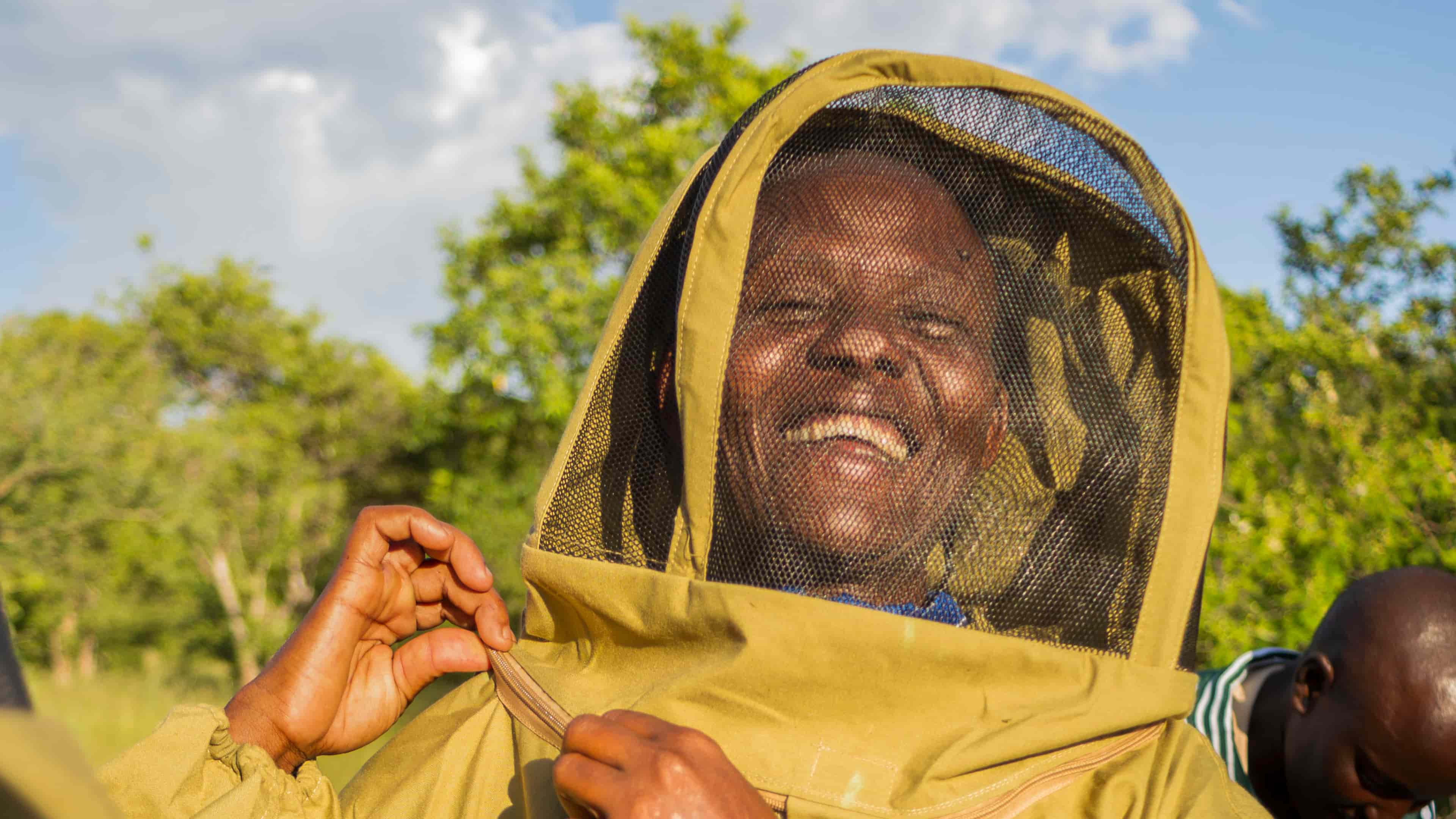
Honey in Her Hands
A beekeeper strengthens her household and guides other women forward.
A beekeeper strengthens her household and guides other women forward.
When Penina Lomnyaki first joined her village beekeeping group eight years ago, she was drawn to the sense of teamwork. “I liked that it was done together,” she says. She had seen traditional hives before through her father-in-law, but she wanted to learn how to manage bees more intentionally.
Training introduced her to modern hive types, harvesting timing, and honey processing techniques. What she enjoyed most was learning how to process honey efficiently and make use of by-products. “When you process honey, you get honey and byproduct at the same time,” she explains. The practical nature of the work gave her confidence.
Women have a stronger voice now.
Today, Penina serves as chairperson of her local women's beekeeping group. Honey sales have helped members purchase goats and strengthen their VICOBA community banking contributions. For many households, income from honey supports school fees, food purchases, and small investments.
In participating communities, nearly 2,000 beekeepers now monitor more than 2,000 hives, and women have harvested 26 tons of crude honey since the program began.
Penina has noticed changes beyond income. Trees that hold hives are protected rather than cut. Fire use is discussed more carefully. Even when harvests are lower due to unpredictable rainfall, the group meets to plan and adjust.
“Women have a stronger voice now,” she says. Income has shifted how women participate in household decisions and community discussions. For Penina, leadership is not about standing in front. It is about guiding meetings, encouraging savings, and ensuring steady progress.
.jpg)
.jpg)
.jpg)
.jpg)