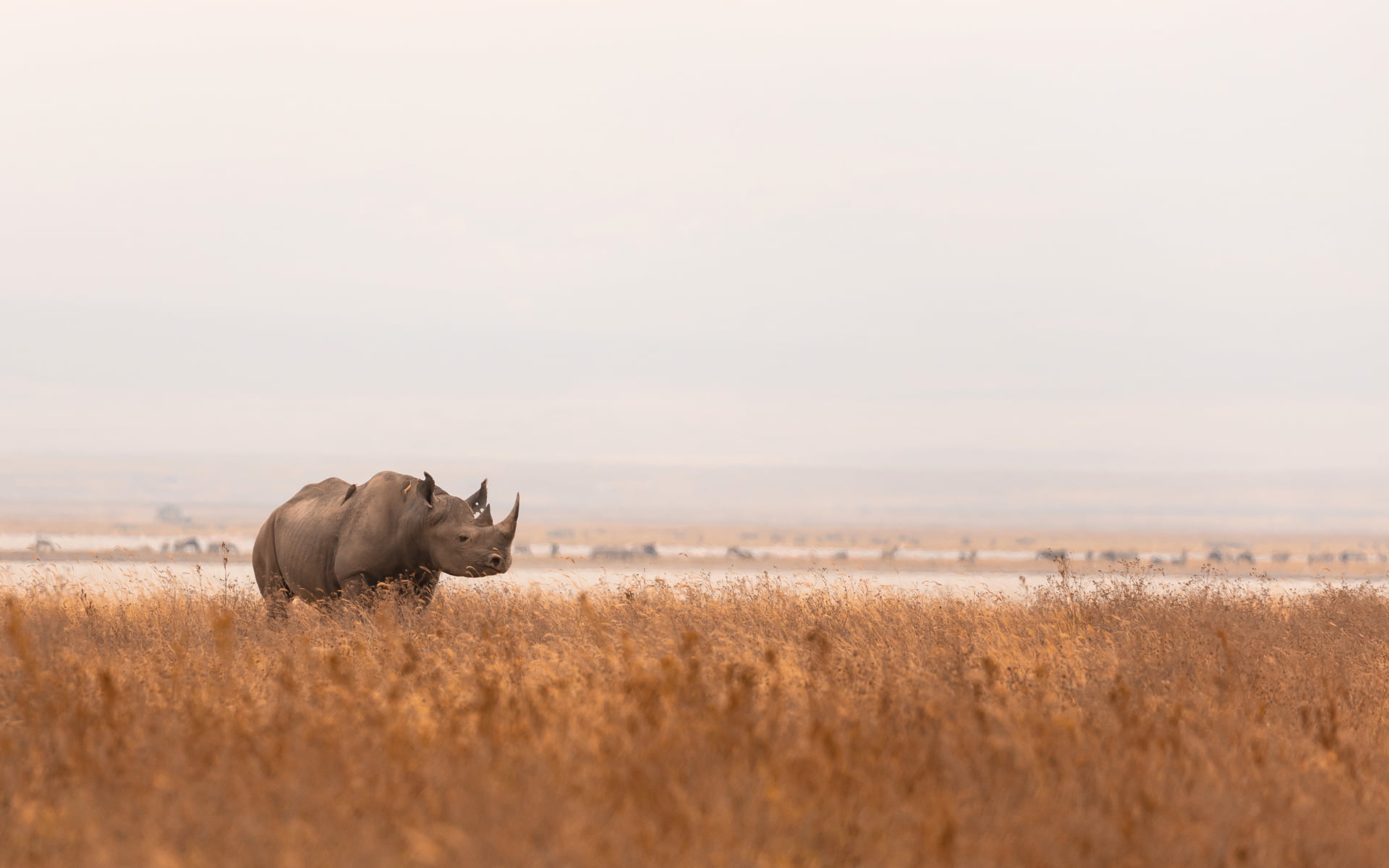


Black rhino recovery cannot be rushed.
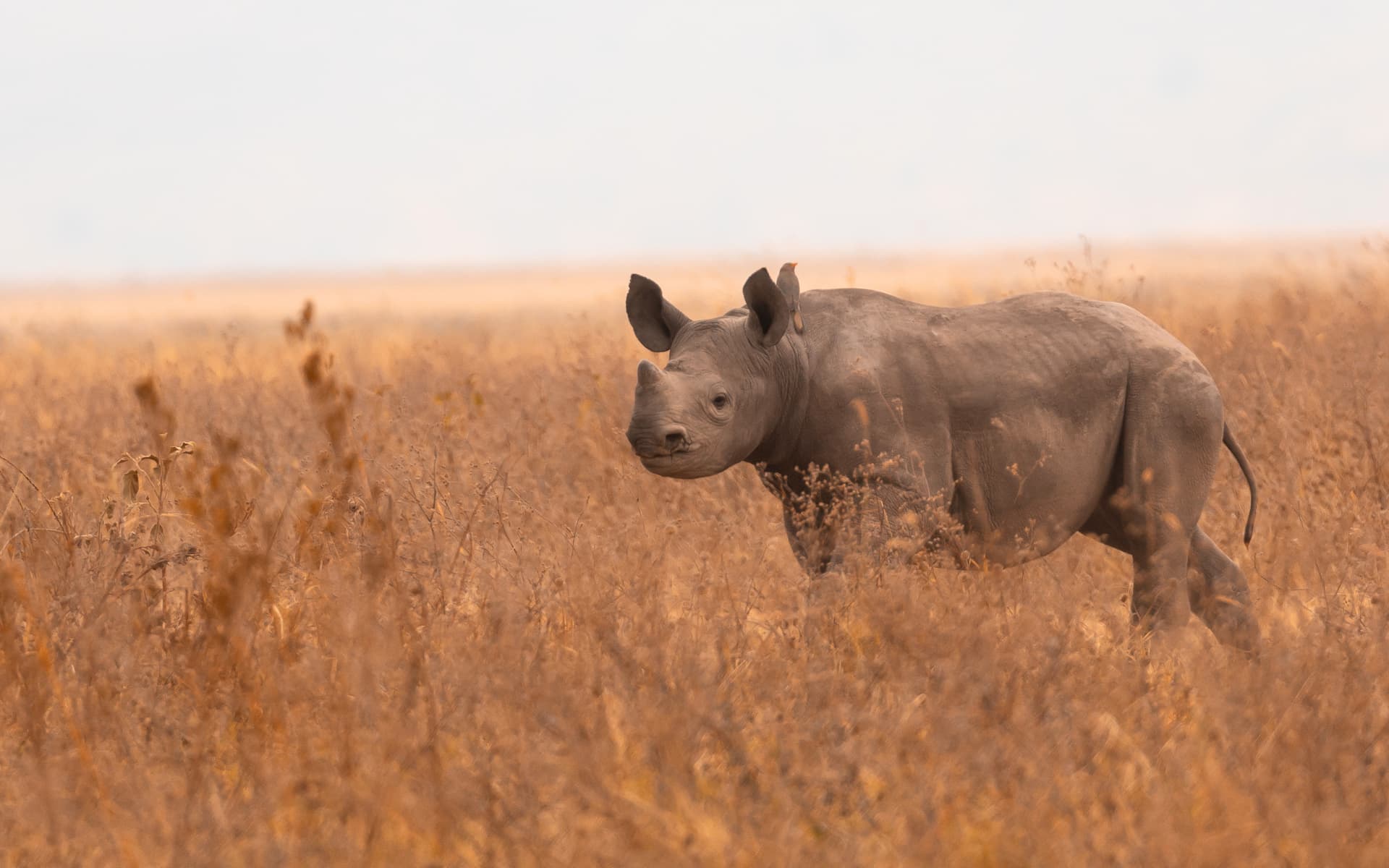
In the wild, female black rhinos have their first calf at around age seven on average. A female carries her calf for roughly 15 to 16 months and generally gives birth to one calf every two and a half to three years. A young black rhino may remain with its mother for two to four years.
For a species once reduced to a fraction of its former population, this slow reproductive cycle sets the pace of recovery. Population gains are measured over years and generations, one surviving animal at a time.
This World Rhino Day, African People & Wildlife is proud to announce that we are a new partner in black rhino conservation in the Ngorongoro Conservation Area.
In this initial phase, APW will support the community-based rhino ranger team and contribute our experience in community engagement, conservation technology, and monitoring. Our role will continue to evolve as we work alongside our rhino conservation partners.
Black rhino recovery shows that progress is possible after devastating loss. There are no shortcuts for a species that recovers one calf at a time. It requires building capacity and trust so communities and partners can make informed decisions. That is the work African People & Wildlife was built to do.
Charles Trout, Chief Program Officer
A population brought to the brink
In 1970, an estimated 65,000 black rhinos lived across Africa. Over the following two decades, intense poaching driven by demand for rhino horn devastated populations.
By 1993, approximately 2,300 remained. About 96% of Africa’s black rhinos had disappeared in little more than a generation.
What followed was a decades-long recovery. By the end of 2024, the estimated black rhino population had reached 6,788, an increase of 5.2% from the previous year. That is nearly three times the population recorded at its lowest point. It is also only about one-tenth of the estimated number of black rhinos living across Africa in 1970.
The recovery is remarkable. And it is far from complete. Black rhinos remain Critically Endangered, and their slow reproductive rate means losing a breeding adult can affect population growth for years. Protecting the gains already made requires the same patience and sustained commitment that allowed black rhino numbers to begin rebuilding in the first place.
Building on years of work in and around Ngorongoro
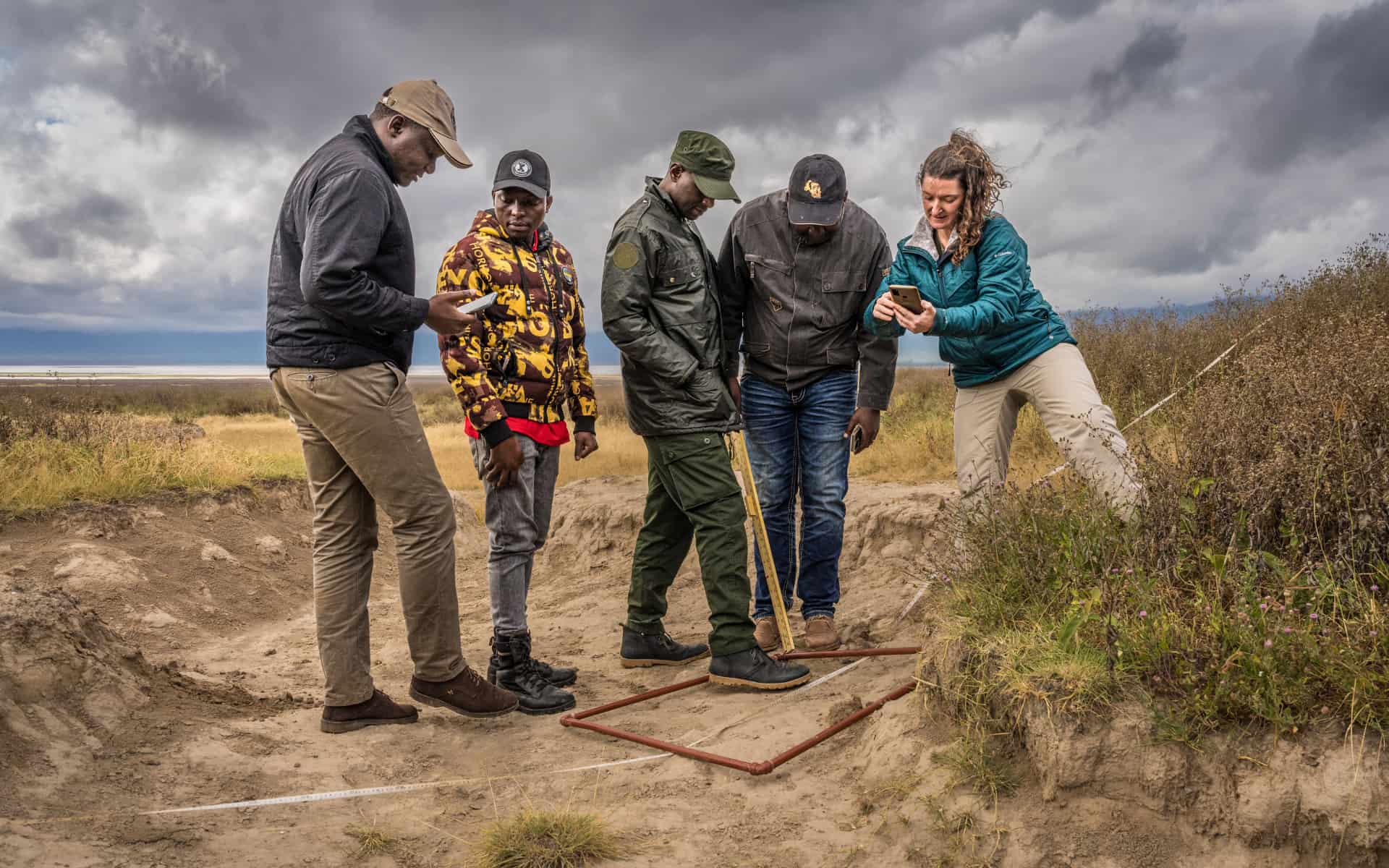
APW’s work in the Greater Serengeti region already includes villages bordering the Ngorongoro Conservation Area, where our human-elephant coexistence program supports locally led monitoring and rapid response. Today, 17 Human-Elephant Coexistence Officers serve eight villages across more than 150 square kilometers of communal land, including 40 kilometers along the Ngorongoro Conservation Area boundary.
Equipped with mobile data collection tools, these local officers monitor wildlife activity, respond to conflict, and help build a growing body of information that communities and conservation authorities can use to guide decisions.
African People & Wildlife has also assisted the Ngorongoro Conservation Area Authority with grassland monitoring on the Crater floor. Learn more about both of these efforts in our Ngorongoro Story Map.
Different species and landscapes require different responses, but we continue to believe people drive lasting conservation progress. Long-term relationships, trust, local knowledge, and technical tools all have a role in building responses suited to each species and place.
An unfinished recovery
The black rhino’s recovery offers a rare form of hope for those of us who care deeply about wildlife and want to make a difference that lasts the test of time.
Black rhinos still face poaching and other pressures, while their slow reproductive rate leaves little room for losses. Their future will depend on conservation work continuing over many years and generations.
This World Rhino Day, we’re taking the opportunity to celebrate how far black rhinos have come while recognizing how much remains at stake. African People & Wildlife is honored to contribute to what comes next for black rhinos in Ngorongoro, and we look forward to sharing more as this work develops.