Elephant Highway
Elephants travel along waterways like this one to move through hillsides filled with farms.
©

Greater Serengeti
WHERE WE WORK
Within the Greater Serengeti Ecosystem, the Ngorongoro landscape encompasses highland forests, open plains, the Ngorongoro Crater, and nearby farming and pastoral communities.
The Ngorongoro Conservation Area is a UNESCO World Heritage Site recognized for both its natural and cultural significance. Its varied habitats support extraordinary wildlife, including elephants, lions, wildebeests, and Critically Endangered black rhinos.
African People & Wildlife works with communities and government partners in and around the Conservation Area. In villages near its boundary, community-based officers respond to human-elephant conflict and collect field data. Within the Conservation Area, our partnerships support community engagement, wildlife monitoring, conservation technology, and the first phase of our work with the community-based rhino ranger team.
Each effort responds to a different need, but all build on the relationships and trust APW has developed across this landscape. We provide practical field support, training, and technology that help local teams and partners make informed conservation decisions.

Working together, we can urgently address human-elephant conflict in and around the Ngorongoro Conservation Area to safeguard both the survival of these magnificent animals and improve the livelihoods of local communities.
Donatus Gadiye, NCAA Elephant Monitoring Coordinator
Elephant populations in the Ngorongoro Conservation Area (NCA) have fluctuated over the years during poaching outbreaks. While conservation efforts have been successful, new threats are creating tensions in the villages that surround protected lands. Now, in addition to poaching, elephant habitat is threatened by human settlements and farming activities, competition for grazing and water resources, and growing demands for tourist infrastructure.
To ensure a sustainable future for the NCA, it is vital to promote coexistence between people and wildlife. Our team is on the ground working within local communities in partnership with traditional leaders, district officials, and the Ngorongoro Conservation Area Authority (NCAA).
Our Warriors for Wildlife program expanded to the Ngorongoro landscape in 2023. These locally-based human-elephant coexistence officers are trained in effective conflict interventions and equipped with state-of-the-art technology that allows for mobile data collection of elephant movements and conflicts. Today, 17 local officers serve eight villages across more than 150 square kilometers of communal land, covering 40 kilometers along the Ngorongoro Conservation Area boundary.
From November 2024 through April 2026, officers responded to 874 conflict incidents, recorded more than 4,100 elephant observations, and provided coexistence education to an estimated 1,800 community members. With practical deterrents, coordinated response, and growing uptake of mitigation tools among farmers, reported crop-raiding incidents during peak conflict months declined by 58% in 2025 compared with the same period in 2024.
Installation of the Conservation Technology Center at the Ngorongoro Conservation Area Authority headquarters is now complete, and we look forward to welcoming conservation teams and partners there soon. The Center will provide a dedicated space for training, collaboration, and reviewing field data to support wildlife monitoring and human-wildlife conflict response across the landscape.
The Center builds on APW’s ongoing collaboration with NCAA, including training rangers in our ACTIVE community engagement approach and connecting existing conflict-monitoring data with APW’s technology platform. By bringing people and information together, it will support stronger, more informed conservation decisions in Ngorongoro.
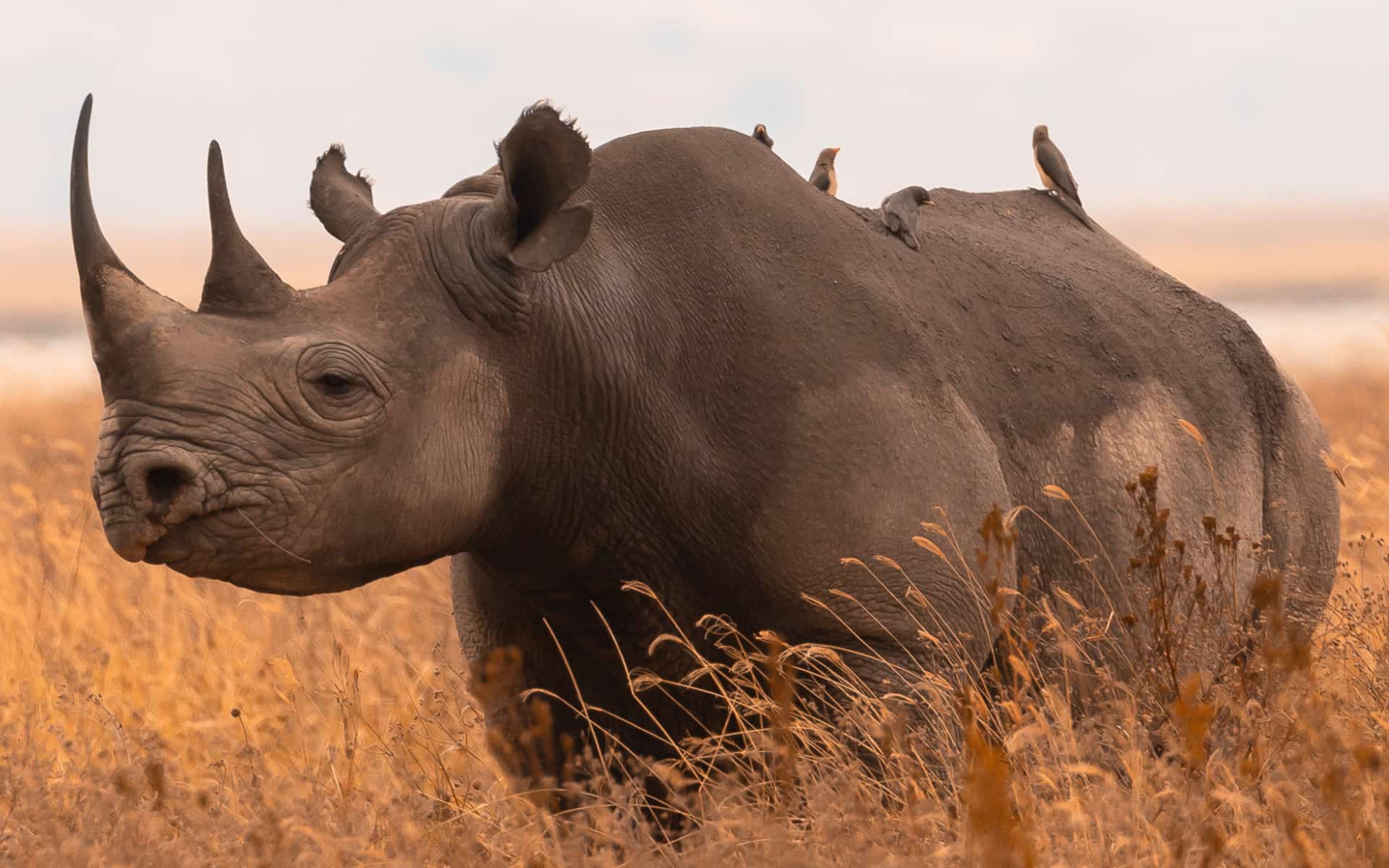
Black rhinos have begun a slow recovery after decades of devastating loss, but the species remains Critically Endangered. African People & Wildlife is a new conservation partner supporting black rhino recovery in the Ngorongoro Conservation Area. Beginning in Fall 2026, our initial work will support a community-based rhino ranger team working across the conservation area, from the Crater floor into the surrounding highlands.
This new role builds on our existing programs in the landscape and the relationships and trust we have built with communities and conservation partners.

Discover how communities in the Greater Serengeti region are leading efforts in elephant conservation and fostering human-elephant coexistence through innovative solutions and collaboration. Visit our story map to interact with the data, see maps, and meet local champions leading the charge.