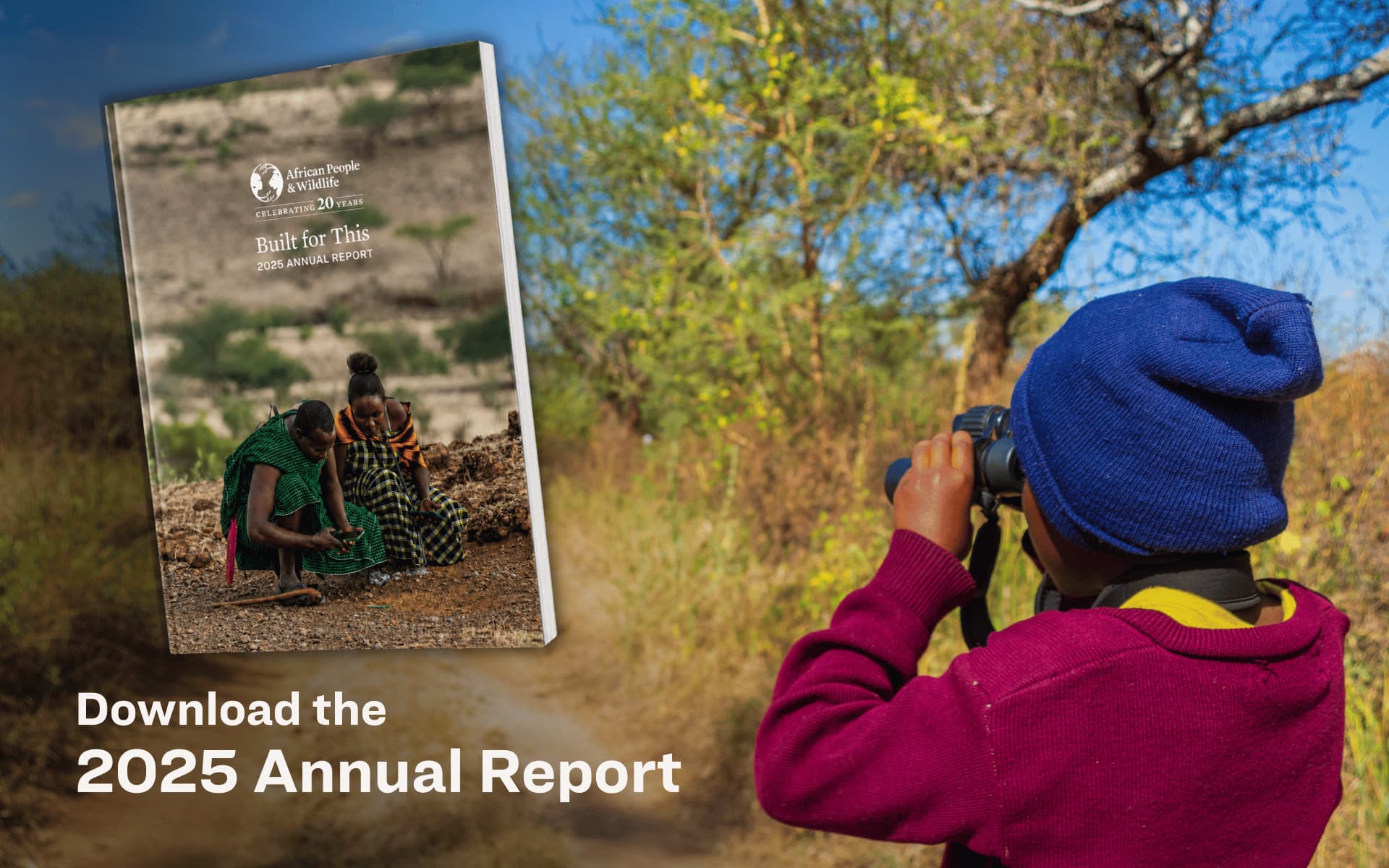

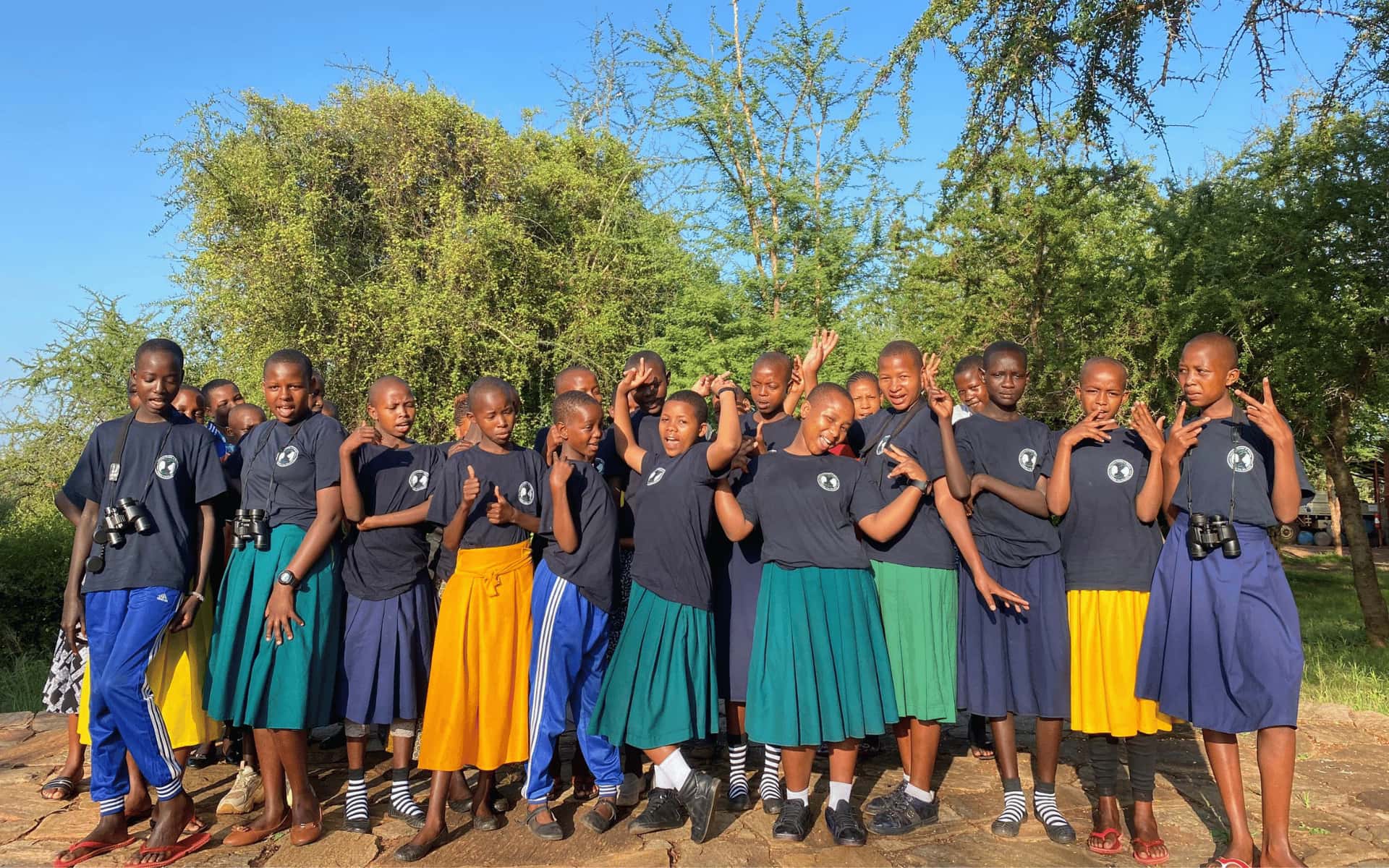
Last year, 148 students and teachers gathered at African People & Wildlife’s Noloholo Environmental Center, set within the Tarangire ecosystem. Here, the landscape itself became a classroom.
For these young participants, learning happened outdoors and through experience. Together, they explored wildlife and habitats, drew on traditional knowledge, and practiced conservation skills with hands-on activities rooted in the land around them.
Building Skills for Conservation
At Noloholo, students learn to use GPS equipment and camera traps, assess grassland health, and see how mobile data collection supports conservation. In 2025, the center welcomed more students, adult learners, and conservation practitioners from across the region, and acted as a hub for girls’ leadership and mentorship.
Expanding Opportunities Beyond Camp
Wildlife Clubs offer students ongoing opportunities to learn about conservation and environmental issues within their schools. Camps provide field experiences, and scholarships help young people continue their education. Through mentorship, participants are introduced to professional conservation work and the pathways it can open.
In 2025, 2,758 students took part in 24 Wildlife Clubs, with girls making up 58 percent of members. Over the life of the program, thanks to partners and donors, African People & Wildlife has awarded 104 full-ride scholarships, and 61 environmental scholars were active this year.
Mentorship and Pathways to Leadership
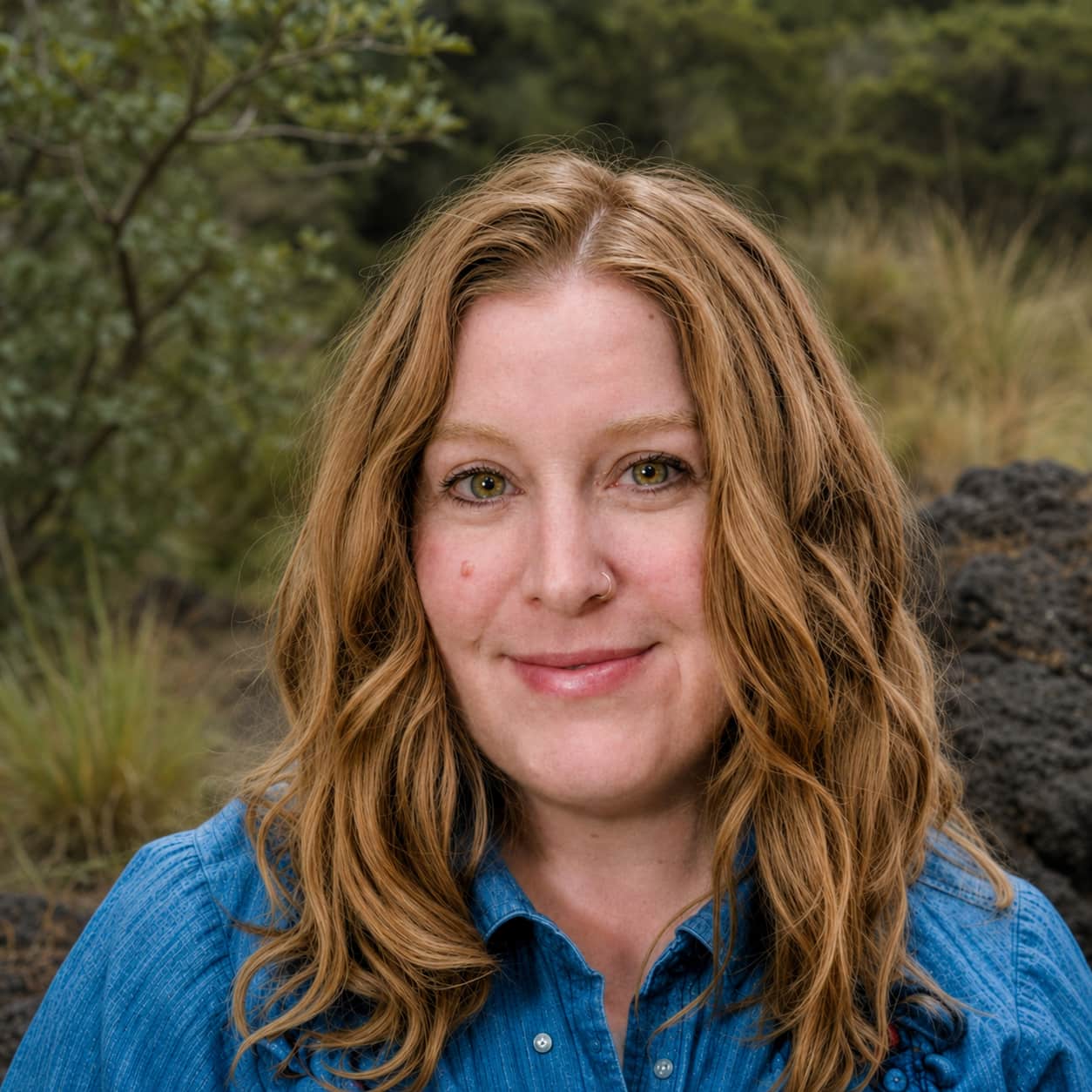
Some participants move from one stage of this pathway to the next. Susan Chege, for example, first joined African People & Wildlife through a mentorship program for young women interested in conservation and community leadership. Today, she is part of our education team, guiding students as they explore the same field that mentorship introduced her to.
Some students will pursue conservation careers. Others will become teachers, farmers, entrepreneurs, parents, and community leaders whose choices influence the future of wildlife and natural resources. Environmental education helps ensure they make those decisions with a deeper understanding of the landscapes that sustain them.
A Lasting Impact
For those who do choose a path in conservation, Noloholo offers an early entry point into a longer journey of learning, mentorship, and professional growth.