
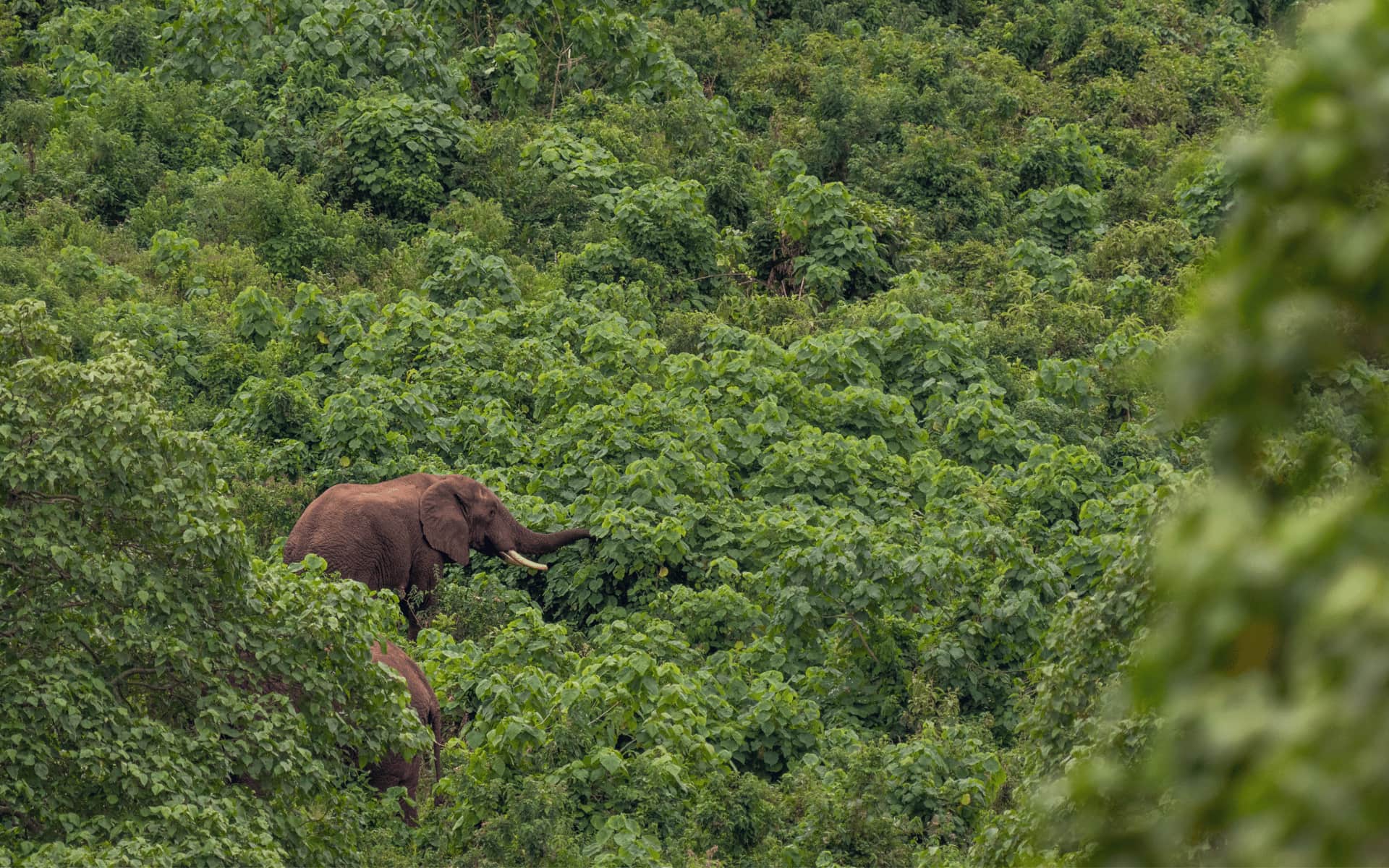
In Greater Mkomazi, tracking elephant movements offers a window into the complex relationship between wildlife and people. Working alongside local communities, we observe how elephants’ journeys sometimes intersect with farms and settlements. By listening to community members and watching the landscape, we seek solutions that prevent conflict before it begins.
In 2025, African People & Wildlife collared and began to monitor four elephants in the area. Each collar tells a story, tracing the paths these animals carve across the land. These data, combined with observations and reports from community members, help us map where elephants and people’s lives overlap. By connecting scientific tracking with local knowledge, we improve our knowledge of how to prepare for and reduce conflict.
Mapping the Tsavo-Mkomazi Ecosystem
Greater Mkomazi forms part of the vast Tsavo-Mkomazi ecosystem, stretching from Tanzania into Kenya. Seasonal rains and dry spells shape the elephants’ routes as they search for food, water, and safe passage. Often, these journeys lead them through fields and near homes. By tracing these seasonal migrations, conservationists and local leaders can better anticipate where conflicts may flare, while working to maintain the vital corridors elephants need.
Collar data offers one piece of the puzzle; the stories and reports from communities and local officers provide another. When these sources are brought together, a clearer picture emerges—one that reveals not just where elephants enter farmland, but also where response teams can make a difference and which landscapes remain essential for elephant movement.
Lessons in Coexistence
Experience from APW’s work elsewhere in Tanzania shows the value of this approach. Along the Ngorongoro Conservation Area border, local officers respond to crop raids and property damage, helping farmers install practical, nonlethal deterrents. In 2025’s peak conflict months, reported crop-raiding fell by 58% compared to the year before, a result that speaks to the effectiveness of collaboration and adaptation.
Longer-term records add depth to these findings. From June 2023 through April 2026, in nearly two-thirds of crop-raiding incidents, elephants left within 30 minutes. In 70% of these cases, farmers reported that deterrents played a role in moving the animals away, bringing hope for peaceful coexistence.
APW continues to expand the tools available to communities. In 2026, staff and partners trained with Save the Elephants in Tsavo, learning to use a variety of approaches: watchtowers, beehive fences, buzz boxes, chili deterrents, metal-strip fences, and alternative boundary crops. Each method offers a different way to help communities and elephants share the landscape safely.
Looking Forward: Adapting and Innovating
No single deterrent will work everywhere. The routes elephants choose, the crops grown, the water sources, and the needs of each community all differ across the landscape. As we collect more data on movement and conflict in Greater Mkomazi, the next challenge will be to match the right prevention measures to the right places—ensuring both people and elephants are positioned to thrive.
